Archive for the 'ERP' Category
August 15, 2010
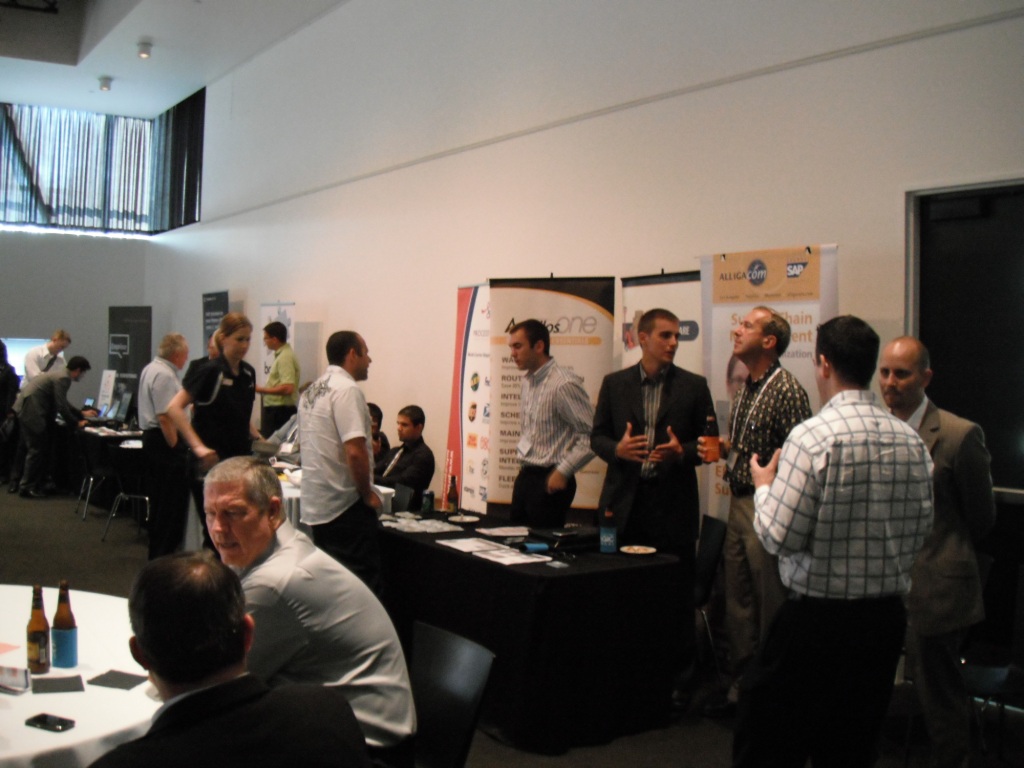
Last week I visited Nike’s World Headquarters in Beaverton, Oregon to attend the ASUG Business One Summit. This was probably one of the most positive and inspiring business events I’ve ever attended.
ASUG stands for “America’s SAP User Group” and it’s a group of SAP customers from throughout North America who network together to share their experiences and knowledge in order to get the most out of their SAP systems.
Nike is a leading member of ASUG and they very kindly donated the use of their impressive conference facilities for ASUG to hold this event. The Nike World Headquarters were as impressive as they were inspiring; this is what your business can do when it conquers the world! The Nike culture rules in this establishment; ties and cigarettes are forbidden from the campus – everyone’s an athlete in the Nike world.

From the SAP Business One perspective, this was a meeting of customers, resellers, solution partners and SAP. All are dedicated, committed and loyal to the Business One product, which is now used by over 30,000 small & medium sized businesses throughout the world.
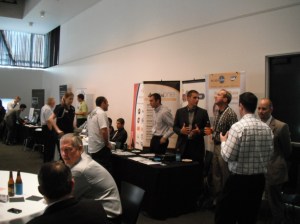
In addition to the North American SAP Partners and customers, there were attendees from other countries around the world, including Denmark, Latin America, India, Switzerland, The Netherlands and New Zealand.
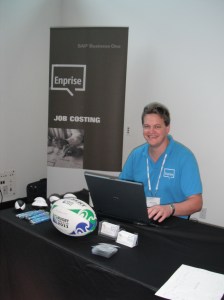
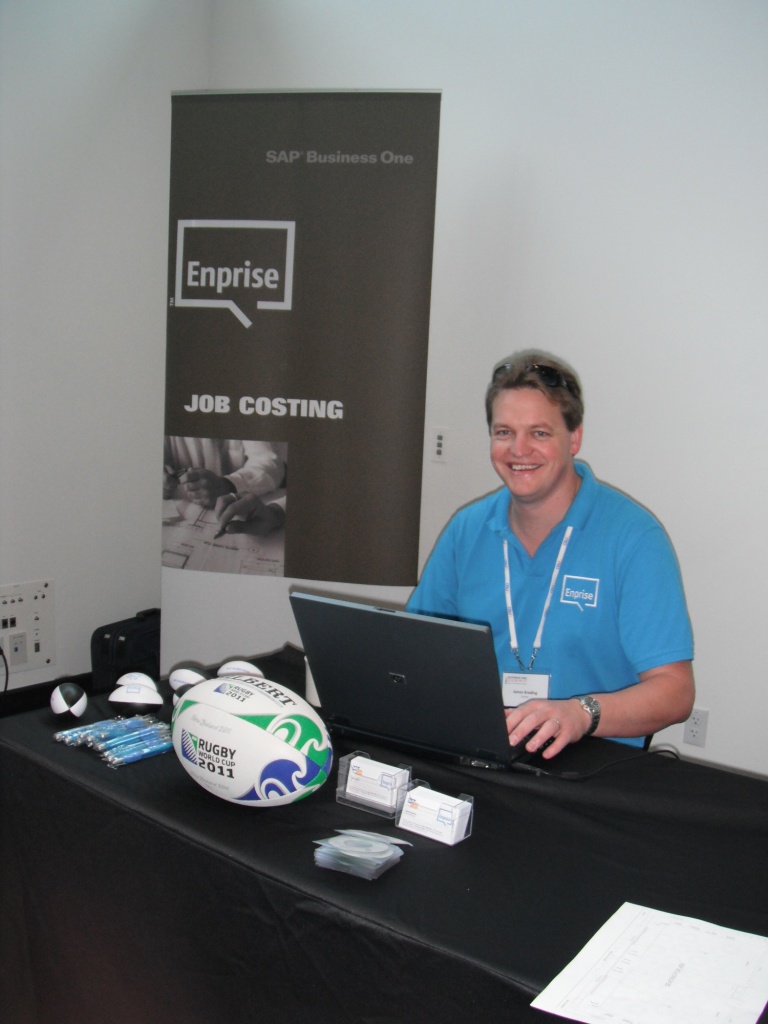
Among the Business One Solution Partners, was Enprise Software from New Zealand, demonstrating Enprise Job Costing for Business One. This is a successful solution, sold around the world, which enables Business One to be used by Service Companies, Project Based Companies and Make-to-Order manufacturers.
This year’s very successful ASUG Business One Summit would never have happened without the tireless commitment and dedication of Carl Lewis of Vision-33, who largely created and organised the event.
I look forward to next year’s ASUG Conference, which Carl tells me might either be at Coca Cola’s headquarters in Atlanta, or SAP’s American headquarters in Newtown Square, Philadelphia.
To match the quality of this year’s event will certainly be a “Nike Challenge”.
Posted in Enprise Job Costing, ERP, Project Costing, SAP Business One, Sap Isv | 2 Comments »
Tags: ASUG, Beaverton Oregon, Enprise, Enprise Job Costing, EnpriseSW, Job Costing, Nike, Nike WHQ, SAP, SAP Business One, SAP ISVs, SME ERP
June 25, 2010
I’ve recently been thinking through the forthcoming New Zealand GST changes with our consulting team at Enprise New Zealand.
New Zealand businesses will incur unexpected costs as a result of the 1 October GST increase from 12.5 percent to 15 percent, unless they take steps now to prepare for the transition.
From an IT perspective there is a general perception that the rate change is a simple issue – that businesses will change the GST rate to 15 percent in the setup options of their accounting software and carry on. Unfortunately it is not always that simple.
Many businesses – do not appear to have realised all the implications of the change.
Changing the GST rate in your accounting system is one thing, but it’s the issues around the changeover, such as customisations to documents & reports and the timing of particular transaction types and situations that are going to catch people out.
Examples include the handling of transactions such as lay-bys, credit notes, orders, back-orders and quotations that are processed within timeframes that span the GST changeover date.
Someone will have to pay the increased GST – and it will be up to the business to make up the shortfall if it does not charge the customer the correct amount. Companies dealing in large volumes of goods, or companies that order goods in advance are more vulnerable in this situation.
With only two and a half months to go, the IRD is yet to release final official guidelines for businesses. A GST Advisory Panel has been set up to consider the transitional issues businesses are facing and will provide regular comment on its website. See: www.gstadvisory.govt.nz
The flexibility of modern accounting software packages, and the ease with which businesses can customise them, is sometimes a double-edged sword. GST has not changed for over 20 years. Since then a huge number of customized reports and forms have been created by many people for individual business requirements that may involve GST calculations. Without thorough testing, businesses won’t know for sure whether their invoices and credit notes will apply the correct amount of GST or whether GST will be reported correctly.
Enprise New Zealand has committed to run automated tests on its customers’ systems before 1 October 2010. We have developed a software application that can be run – remotely in most cases – through system files and databases to check all customisations and identify instances of hard-coded GST rates in the customer’s environment. Enprise can then advise and or help customers make their system compliant.
The application we’ve developed is automated, but beyond that, business processes need to be checked for each customer to understand whether they are processing types of transactions that require further GST consideration.
The sheer number of companies that need to have their systems and processes checked is a big issue. Enprise will check at least ten customers a day, every day until 1 October. It’s unusual to have to check so many systems in such a short time frame.
It’s going to be a busy time for the local accounting software industry.
The GST change is not likely to kill anyone – but it could result in cost, inconvenience and bother if not properly prepared for.
Posted in ERP, MYOB EXO, SAP Business One | 2 Comments »
Tags: Accounting Software, EnpriseNZ, Financial Software, GST, New Zealand
June 15, 2010
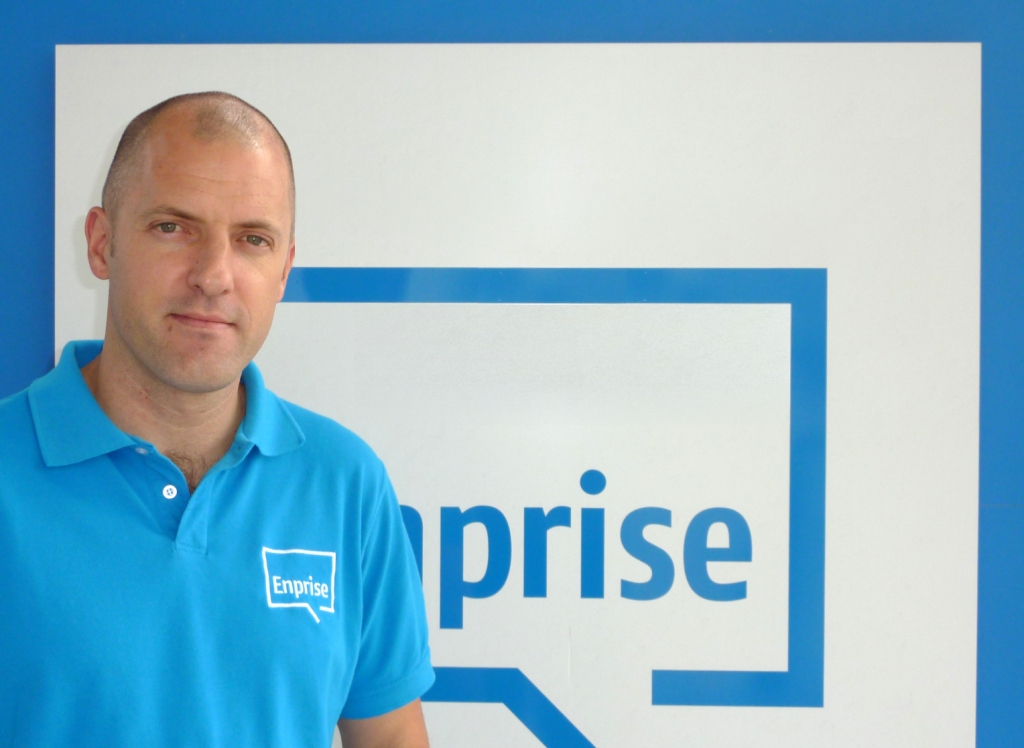
One of the “Generals” of Enprise Group is Jason Langley, who heads up Enprise Software. Enprise Software is the creator and global distributor of Enprise Job Costing for SAP Business One, which is sold through SAP’s international reseller channel.
I’ve known and worked with Jason for over 15 years, starting from the mid 1990’s, when we both worked at PC Direct (a successful NZ-based Personal Computer company). Jason was the corporate sales rep and I was the Information Services manager.
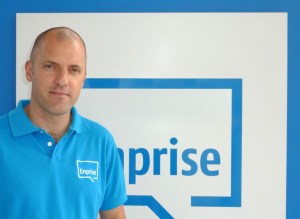
Following PC Direct, Jason has held a number of positions in computer, web-development and software companies. These include another company I’m involved in, Datasquirt (which specializes in Social Media and SMS Text solutions for Corporate Contact Centers) – where he was the versatile “jack of all trades” that held the business together during its early formative years. Jason’s repertoire of diverse skills include computer programming, web site design, graphic art, sales, marketing and general management (I’m sure to have forgotten some…).
Jason’s skills and experience stand him in good stead to lead the team at Enprise Software, which is based in Auckland, New Zealand and works closely with over 100 SAP Business One resellers and their respective customers, which are located all around the world.
Posted in Datasquirt, Enprise Job Costing, ERP, Project Costing, SAP Business One, Sap Isv | Leave a Comment »
Tags: Enprise, Enprise Job Costing, Enprise Software, Job Costing, PC Direct, Project Costing, SAP, SAP Business One
April 24, 2010
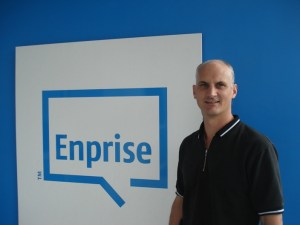
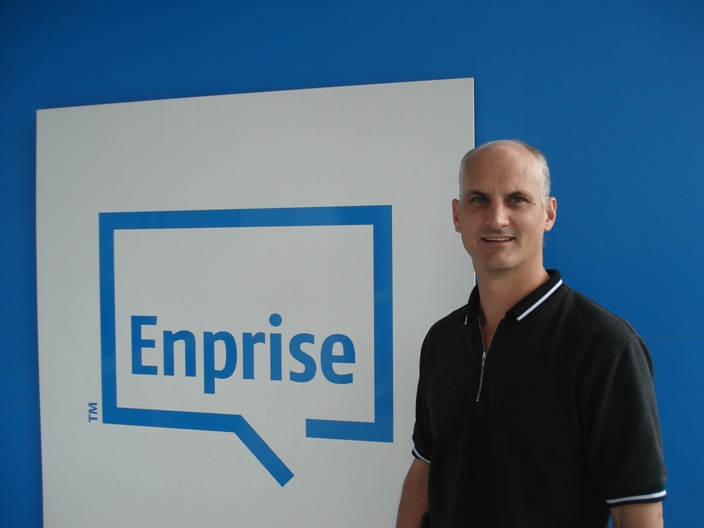
Here is a rare photograph of Elliot Cooper, co-founder and CFO of the Enprise Group.
Elliot and I have worked together in several businesses over the last 15 or so years, firstly at PC Direct, then at Exonet and now at the Enprise Group. He’s a legendary finance man and a great accounting software designer – with a particular interest in Job Costing (or Project Costing). Elliot was very instrumental in the design of both Enprise Job Costing for SAP Business One and prior to that the Exonet ERP system.
With Elliot’s significant input into its design, it’s no wonder that Enprise Job Costing is so strong in the area of General Ledger integration with SAP Business One.
Posted in Enprise Job Costing, ERP, MYOB EXO, Project Costing, SAP Business One, Sap Isv | Leave a Comment »
Tags: Accounting Software, Enprise, Enprise Group, Enprise Job Costing, ERP, Exonet, Financial Systems, Job Costing, MYOB EXO, Project Costing
April 22, 2010
Speaking as someone who is involved in the global SME ERP Industry through Enprise NZ and Enprise Software, involved in the Cloud Control Panel & Hosting industry through EMS-Cortex and involved in the Business Messaging and Social Media Industry through Datasquirt; here is my prediction of how ERP Software will be sold in the new decade that we are now entering;
Sales Process
- Firstly, the prospective customer will search the Internet for an ERP Solution and ERP Reseller that look suitable for their type of business. This will involve the use of a search engine such as Google, Bing or Yahoo and would include searches of web sites and various Social Media including Twitter, Linked-In, YouTube, Facebook and others.
- The prospective customer will then contact the ERP Reseller via Email, Instant Message, Voice Call or Social Media Tweet, asking for more information and a demonstration of the ERP solution.
- An initial consultation/discussion will follow via Email, Voice Call, Social Media etc to determine whether the fit between the ERP Solution and the customer requirements is such that a product demo is warranted.
- The ERP Reseller will then set up a temporary demonstration ERP solution in the Cloud using their own portal in the Cortex Cloud Control Panel. The demonstration system would be a clean installation of the ERP demo, complete with its own clean virtual database server and (optional) desktop environment. The exact solution, including add-on industry vertical components and temporary user accounts can be selected and configured in the Cortex portal. This demo system would be provisioned, up and running within minutes of being requested on the portal and would be set to last for a predetermined duration for the purposes of the demonstration.
- The ERP Reseller would then either visit the prospective customer and demonstrate the ERP solution on-site (geography permitting) using a computer connected to the Internet or will demonstrate via a web meeting tool such as GoToMeeting or WebEx.
- The prospective customer might then want to spend further time trying out various aspects of the demonstration system after the ERP Reseller has finished demonstrating it. If the ERP Reseller agrees to this then they can arrange for the demonstration system to be kept alive in the Cloud for a longer duration to enable the prospective customer to continue with their own trial use of the system.
- If/when the prospective customer decides to purchase the ERP system, the ERP Reseller would go back into their portal on the Cortex Control Panel, delete the demonstration system and configure a new live ERP system. The company and user names would be entered into the Cortex portal and also any additional up-sell items would also be included, such as Exchange Email accounts, SharePoint, Blackberry, VOIP accounts, Backups, Firewalls, Hosted Desktops (eg XenApp, XenDesktop), Payroll Access etc.
- Application licensing information would be sent via Web Services to the respective vendors (eg Microsoft, Citrix, SAP, MYOB etc) and licences would be generated and applied back to the new hosted system via web services.
- The Cloud-delivered ERP solution is now live, up and running. The ERP Reseller’s consultants can now access the system to configure the ERP Solution to the requirements of the customer.
- The ERP Solution is now live in the Cloud and can be accessed from anywhere via the Internet. This includes all the branch and home locations of the customer as well as the ERP Reseller and the ERP and other software vendors.
Applying Upgrades and Patches to the ERP System
Prior to a new upgrade or patch being applied to a live ERP system, it must be tested against the individual customer’s data and processes to ensure that the software changes work correctly and cause no disruption to the business.
To enable this testing process, the ERP Reseller will go into their portal of the Cortex Control Panel and request a temporary test copy of the live ERP Environment. This enables the ERP Reseller’s consultants, in conjunction with the customer’s staff, to test the new software version and identify any possibly reconfiguration issues on the test system.
Once the testing process is completed and signed off, the ERP Reseller can go back into their portal of the Cortex Control Panel and apply the upgrade to the live system. They can also delete the test system when they are finished with it.
Support
Support of the ERP System by the ERP Reseller and the ERP Vendor is a lot easier, more efficient and less costly under this new model for the following reasons;
- Because the ERP System and its virtual operating environment was provisioned by Cortex, it would be done the same every time, using best practices, using the correct program versions and configuration. These things are therefore known to the support personnel and not subject to variation.
- The support personnel have quick and easy remote access to the hosted ERP solution (subject to permission from the customer to access their system and data).
The model works better for everyone involved in the ERP system sale. The customer, the ERP Reseller and the ERP and other software vendors.
The Customer gets:
- Extended Access to a Demo System
- Reduced Capital Outlay
- Faster Implementation
- Reduced management overhead of looking after local server & infrastructure
The ERP Reseller gets:
- Up-sell opportunities
- Faster Implementation – freeing up time to sell more!
- Repeatable Cookie Cutter implementations
- Easier to Support
The Vertical Solution Vendor gets:
- Opportunity to list solutions on the Cortex Portal
- Easier Support on a Known Environment
The ERP Vendor gets:
- Faster Implementations = More Sales
- Easier & Less Expensive Support
- Better Product Performance in a Correct Known Environment
Posted in Cloud, Communication, Cortex, Datasquirt, Enprise Job Costing, ERP, Multi-tenant, MYOB EXO, SAP Business One, Sap Isv, Virtualization | 1 Comment »
Tags: Citrix, Cloud, Cortex, Datasquirt, EMS-Cortex, Enprise, ERP, Hosted ERP, Microsoft, MYOB, MYOB EXO, SAP, SAP Business One
April 11, 2010
Having clocked up more than 20 years of working in the ERP industry targeting small to medium enterprises (SMEs), I can now state confidently that there are some truths to this business that will probably never change.
Some of those truths are as follows…
- Small and medium-sized businesses prefer to buy from and deal with local people, when it comes to ERP and accounting software. They want to eyeball and have face to face access with the people they are dealing with.
- However, those businesses have no problem with using a centralized help desk function which is accessed by toll-free phone or the Internet – if it is offered in conjunction with localized representation.
- SME focused resellers and service agents with only one geographic location therefore tend to be very generalist and opportunist about what type of solutions they sell and the customers they sell to. In other words they resist specialization because they only have a limited market of customers in their locality. This is obviously not the case for resellers that have wide regional coverage – as they have a larger accessible market and can afford to build up expertise in particular vertical markets.
For the above reasons, from the perspective of Enprise Software we are now seeing a consolidation of our SAP Business One ERP resellers that sell Enprise Job Costing, evident everywhere, but particularly in North America. The result is fewer reseller organisations, but with a much more spread-out branch structure and centralized customer support functions.
One of our best Enprise Job Costing partners that has been particularly successful in its geographic expansion with centralized support, is Vision-33 which now has regional offices in Irvine CA, Los Angeles CA, San Francisco CA, Salt Lake City UT, Seattle WA, Portland OR, Houston TX, Austin TX, Dallas TX, Fort Lauderdale FL and St Johns NL Canada.
Locally in New Zealand, Enprise New Zealand has been following the same strategy of building up a network of regional sales & implementation offices, with centralized support to claim the mantle of a “Nationwide” presence. Enprise NZ has offices & representation in Auckland, Waikato, Wellington and Christchurch (further regional expansion is planned for this year) . Centralized support is offered through toll-free 0800 numbers and Internet support web site.
I believe this is the best model for SME ERP sales and service. This is evidenced by the stellar sales success currently being enjoyed by both Vision-33 and Enprise New Zealand as they expand their presence in their respective markets. They can specialize in the types of solutions they offer to the market, building up specialized expertise, rather than needing to be all things to all people. It should also be said that specialized expertise and the quantities of scale achieved by these larger organizations leads to more successful outcomes for customers and greater profitability for the reseller…and that must be a good thing.
Posted in Enprise Job Costing, ERP, MYOB EXO, Project Costing, SAP Business One, Sap Isv | Leave a Comment »
Tags: Accounting Software, Enprise, ERP, Exonet, MYOB EXO, SAP Business One, SME, SME ERP, Vision-33
April 5, 2010
SAP Business One is today a well-proven and successful ERP platform for SME Businesses around the world. It is now supported in over 80 countries by over 820 VAR Partners and boasts over 500 add-on solutions built by over 300 Solution Partners. As a platform for developing specific vertical-market solutions, Business One has excelled with its Data and User Interface API’s, which enable third-party developers (like Enprise Software) to develop add-on modules that look, interact and reside with Business One as if they were part of the core product itself.
Later this month, the new version 8.8 will be released. This is the version that the SAP Business One partner community has been waiting for since it went into “ramp-up” (final, live testing on selected and restricted customer sites) in August 2009.
Version 8.8 of SAP Business One has an emphasis on the new technology environment, including enhanced connectivity to “Cloud Computing” solutions & Web Services, Embedded Analytics from SAP Business Objects, further improvements to its SDKs, a new “look and feel”, upgrade wizards etc.
At the same time, Enprise is shipping a new version of the popular Enprise Job Costing for SAP Business One which is fully compatible with Business One 8.8 and features new levels of integration with Microsoft Project.
Posted in Cloud, ERP, Project Costing, SAP Business One | Leave a Comment »
Tags: Cloud, Enprise, Enprise Job Costing, ERP, SAP, SAP Business One, SME
April 5, 2010
Cloud Computing is the most significant paradigm shift to happen to the business software applications industry since the wide-scale adoption of Personal Computers and MS-DOS by businesses in the 1980’s.
After being predicted for many years, the paradigm shift is happening now and is being driven by;
- Real economic and practical requirements of businesses around the world (influenced in part by the recent global economic downturn).
- Major technology advances and economies in Cloud delivery infrastructure.
- Shifting attitudes of business people towards widespread usage of the Internet.
None of the above drivers is a constant. Each is getting stronger as time goes on. From my involvement in the Cloud and applications industries, I believe we are now starting to experience the tipping point.
Paradigm shifts create winners and losers. Business models are changing and what worked in the past and present, may not work in future.
Those in the business software industry that don’t embrace the new world of the Cloud fast enough will be left behind and pay a heavy price. Those that are quicker, stand to make the gains of what a paradigm change has to offer – and this can potentially be a huge win.
The good news for many business application developers is that their applications need not be browser-based nor multi-tenanted to operate successfully in the Cloud. Conventional Windows applications can be delivered economically in the Cloud using technologies such as Citrix XenApp, XenDesktop or Terminal Services and “virtual multi-tenanting”, achieving savings on hardware costs, can be achieved using virtual servers. Servers are now more economical to run as Hosted Virtual Servers using virtualization technologies from Microsoft and Citrix, such as XenServer and Hyper-V. A Hosted Virtual Server can be considerably less expensive over its lifetime than an on-premise Hardware Server.
The good news for Hosted Service Providers is that they can get to market faster with new Cloud virtualization technologies and application delivery offerings using a smart provisioning solution such as Cortex from EMS-Cortex. With Cortex, Hosted Service Providers can be up and running within days, reinvented as “Cloud Providers” and in time to capture the new opportunities.
Business Application Software Vendors need to team up with “Cloud Providers” for a win-win collaboration in the Cloud. The market and the technology is ready!
Posted in Cloud, Cortex, ERP, Multi-tenant, Virtualization | Leave a Comment »
Tags: Citrix, Cloud, Cortex, EMS-Cortex, Hosting, Hyper-V, Virtualization, XenApp, XenDesktop, XenServer
March 29, 2010
Apart from the fact that global sales of the Cortex V8 Cloud Control Panel are at an all-time high, there is another aspect of this product that I find quite exciting. That is, the growing channel-to-market for hosted applications that is offered by Cortex’s expanding base of Cloud Service Providers around the world.
Cortex is used by Cloud Service Providers to provision and manage applications, services and infrastructure (such as virtual servers, web servers, back-up systems, DNS etc) that they deploy in their Clouds. Without Cortex, the Cloud Providers would either need to hire an army of system engineers to manually provision and manage their hosted offerings to their customers, or they would need to develop their own bespoke Cloud Control Panel. Cortex is popular because both of these alternatives are potentially very costly and involve significant business risk.
Not only is the base of Cortex users growing, but the base of supported applications is also growing rapidly. Cortex’s main “bread and butter” applications are Microsoft Hosted Exchange, SharePoint, Citrix XenApp, XenDesktop, MS SQL Server, MS IIS, MS CRM, Blackberry, Backup Agent and Hyper-V or XenServer. These are common to most Service Providers, but more and more the envelope is being stretched to include ERP, CRM, Accounting, Payroll, Hosted Office and other business applications.
Cortex provides an API/SDK, so that third parties can add support for other applications. Software companies around the world are realizing that getting their applications added to the Cortex application list gets them potential global exposure through Cortex’s expanding user base.
From another perspective; the increasing base of Cortex’s supported applications is also opening up new channels to market for its Cloud Service Provider clients. Cortex’s delegated-administration capability lets application resellers or channel partners have their own branded Cloud Control Panels from which they can provision and deploy hosted applications on demand – selling the services of the Cloud Providers in the process.
So I believe that the Cortex Cloud Control Panel is the connection between two worlds – the Cloud and Software Channel Businesses (such as ERP & CRM). Exciting stuff!
Posted in Cloud, Cortex, ERP | Leave a Comment »
Tags: Citrix, Cloud, Cloud Control Panel, Cortex, CRM, EMS-Cortex, ERP, Hosted Applications, Hosted Exchange, SharePoint, SQL Server, XenApp, XenDesktop
March 25, 2010

SAP Business One is a very successful, SME-focused Business Management / ERP software package that is sold through reseller partner channels throughout the world. I think of it as an SME ERP “platform” because it has an excellent set of API’s for third-party developers / ISVs to develop add-on solutions that look and feel as if they are part of the core Business One package.
The fact that SAP Business One is a developer-friendly, global ERP platform for SME businesses has helped it build up a portfolio of over 500 add-on solutions, built by over 300 ISV or “Solution Partners”. My company Enprise Software is one of these Solution Partners. We are based in New Zealand, yet sell our Job Costing solution all around the world, through SAP’s partner channels.
Given that partner-built solutions (both industry vertical and horizontal) are such a big part of the SAP Business One value offering, it was deemed necessary to set up an advisory council of leading Solution Partners to advise on policies and act as a sounding board for SAP Business One executives.
The SAP Business One Solution Partner Advisory Council (SPAC) was formed in December 2005 and was made up from about 12 of the top SAP Business One Solution Partners from around the world at that time. One of the first tasks the council set itself (in conjunction with SAP) was to define the council’s mission statement. The following statement was constructed back then and remains in place today;
“Maximize the success of SAP’s partner community by driving change, innovation, and ownership of the global SME market.”
Since its creation, the SPAC has worked collaboratively with SAP to:
- Define and prioritize business requirements for product enhancements
- Develop a collaborative engagement model for SSP’s and VAR’s to more effectively sell SAP and partner solutions
- Establish effective release policies that enable SAP and its partners to ensure consistent, quality upgrades
- Modify solution certification processes & criteria to better suit market needs
I was fortunate to be one of the founding members of the SPAC in December 2005 and today I’m honored to be its Chairperson.
Current members of the SPAC are;
SAP executives specifically and regularly involved with the SPAC are;
- Jim Kofalt
- Greg Robinson
- Ralf Mehnert-Meland
If you would like to communicate with the SPAC, please contact me or one of the listed members, or enter a reply to this article.
Posted in ERP, Project Costing, SAP Business One | Leave a Comment »
Tags: Accellos, Argentis Consulting, Boyum-IT, CitiXsys, Enprise, EnpriseSW, Job Costing, Maringo, SAP, SAP Business One, SAP ISVs, Software Development, Solution Partners, SPAC, Support One, Third Wave, Trimergo, Valogix, Vertical Solutions



 Mark Loveys